Warsaw is the largest commercial property market in Poland and the most diverse in terms of available formats, price points and tenant mix. The city is divided into 18 administrative districts (dzielnice), and commercial rents vary significantly depending on location, proximity to transport infrastructure and the dominant land use in each area.
City Centre and Śródmieście
The central district (Śródmieście) contains the highest density of commercial activity in Warsaw. The area around Nowy Świat, Marszałkowska and the streets surrounding Warsaw Central Station (Warszawa Centralna) form the core of high-street retail. Office rents in prime Śródmieście locations reflect the density of demand; street-level retail in the most active sections commands the highest rates in the city.
The Warsaw Spire, Warsaw Trade Tower and other central office towers provide Class A office space. Smaller businesses and professional services firms typically look at the secondary streets feeding off the main arteries, where rents are lower but footfall is still substantial.
Praga-Południe and Praga-Północ
The Praga districts, on the east bank of the Vistula, have undergone significant change over the past decade. Praga-Północ in particular has attracted creative businesses, studios, small-batch manufacturers and independent food and beverage operators drawn by lower rents and relatively large unit sizes in repurposed industrial buildings.
Commercial rents in Praga are considerably lower than in Śródmieście. Unit sizes tend to be larger, and landlords — often private individuals rather than institutional investors — can be more flexible on lease terms. The trade-off is lower footfall for retail-facing businesses, though proximity to the developing Różycki Bazar area has increased commercial interest in parts of Praga-Północ.
Mokotów
Mokotów is Warsaw's most significant secondary office district. The Służewiec area (sometimes called "Mordor" colloquially due to its large office park density) concentrates a large volume of corporate tenants and the services that support them — restaurants, convenience retail, fitness facilities and coworking spaces. Commercial units in this area are oriented primarily towards daytime office workers rather than residential footfall.
Outside Służewiec, residential Mokotów has a network of neighbourhood retail streets — particularly around Rakowiecka and Puławska — with a more community-oriented tenant mix.
Wola
Wola has emerged as Warsaw's fastest-growing commercial district following significant infrastructure investment and the extension of the metro line. The area around Rondo Daszyńskiego now hosts some of the newest and tallest office towers in the city. For businesses seeking modern Class A or B+ office space with good metro connectivity, Wola's central zone is the primary alternative to Śródmieście proper.
Ground-floor retail in newly built Wola developments tends to be priced at rates reflecting the premium nature of the buildings. Older sections of Wola — particularly west of Towarowa — retain a more industrial character with lower commercial rents.
Coworking Spaces in Warsaw
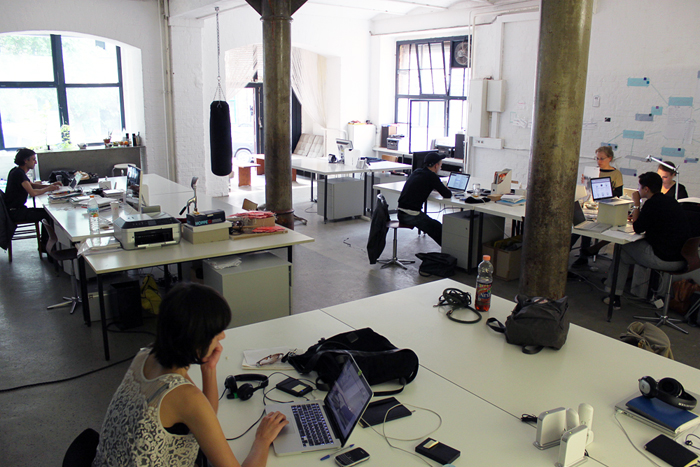
Coworking operators are distributed across central Warsaw and Mokotów, with a smaller number of locations in Wola and the Praga districts. Providers operating in the Warsaw market include both international operators (WeWork, Regus/IWG) and Polish-owned spaces. Most are concentrated within walking distance of major metro and railway stops.
Hot desk rates in Warsaw coworking spaces vary considerably depending on location and included services. Central Śródmieście spaces typically price hot desks higher than equivalent spaces in Mokotów or Wola.
What Affects Commercial Rent in Warsaw
- Distance from metro stations (particularly on the M1 and M2 lines)
- Building age and condition (Class A / B+ / B)
- Floor level for office space
- Available parking
- Existing tenant mix in the building or retail scheme
- Lease term length — longer term often allows lower headline rent negotiation
What to Check Before Signing a Lease in Warsaw
Planning and Usage Classification
Polish law requires that the stated use of a commercial property (przeznaczenie lokalu) in the lease agreement matches the intended business activity. If the space is classified for office use but the tenant plans to open a food service business, the landlord must confirm the building's technical classification permits this, and the tenant may need a separate sanitary inspection (sanepid) approval.
Building Energy Certificate
Since 2023, sellers and landlords of commercial properties in Poland are required to provide an energy performance certificate (świadectwo charakterystyki energetycznej). This is relevant for estimating utility costs, particularly heating in older buildings.
Service Charge Transparency
Service charges (opłaty eksploatacyjne) in Warsaw office buildings and shopping centres are reviewed annually. Ask for the previous year's reconciliation statement before committing to a lease, as the difference between estimated and actual service charges can be material in older buildings with inefficient central systems.
Planning Obligations for Fit-Out Works
Significant fit-out works — including structural changes, installation of HVAC, or alterations to the building façade — require a building permit (pozwolenie na budowę) or at minimum a notification to the district authority (zgłoszenie robót budowlanych). The lease should specify which party is responsible for obtaining these approvals.
External References
Related Articles
How to Rent Retail Space in Poland · Coworking vs Traditional Lease